Showing posts with label LibraryThing. Show all posts

Wednesday, January 11, 2017

Woman No. 17 and The Stolen Child


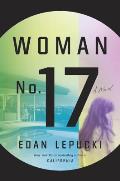
WOMAN No. 17 by Edan Lepucki

I was lucky enough to win this book through librarything.com's Early Reviewer program. Thank you, librarything!

I'd read and enjoyed Lepucki's first book, California, a post-apocalyptic novel about Frida and Cal, a young married couple.

I was intrigued by the title of her new novel, Woman No. 17, and wasn't sure what to expect.

Lady is recently separated from her husband, and is searching for someone to take her of her young son, Devon. She finds "S", a young woman who bonds quickly with Devon, Lady's older son, Seth, and Lady herself. Lady is trying to figure out if she wants to get back with Karl, and is beginning to write a book about her journey with Seth, who does not speak. "S" dropped out of a college art program, and is experimenting with who she is - the "S" is a shortened version of Esther, her given name.

Told from both women's point of view, Woman No. 17 explores friendship, relationships with children and partners, and art. Both Lady and "S" have a lot to figure out, and they sometimes encourage and help each other and sometimes hinder and hurt each other.

I enjoyed not knowing what "Woman No. 17" was until well into the book, as well as these two characters. A good read!


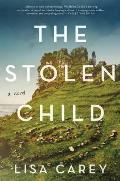
THE STOLEN CHILD by Lisa Carey

In 1959, sisters Emer and Rose live with their families and communities on St. Brigid's Island, an isolated island in Ireland. It is a rough life, everyone's well-being depends on the land and the sea, both of which can be harsh and undependable. Rose is sunny and fertile, producing sets of twins every few years. Emer is dark and brooding, cherishing and protecting her only child, a son.

Brigid, an American, comes to the island. Her uncle, who lived on the island all his life, has died, and left his house to her. However, Brigid comes for more than just a new home. She is hoping for a miracle. St. Brigid's Island is steeped in mystery about St. Brigid, who is said to have lived on the island centuries before. Brigid, the American, is hoping that St. Brigid can give her what she wants most of all.

Brigid has a hard time breaking into the community on the island. The islanders, including Emer, with whom she develops an intense relationship, are reluctant to share the island's secrets with her.

Irish myth and lore is intricately woven into the lives of these women and their families, bringing depth and beauty to the story. Well done!

Thanks for stopping by! Clicking on the book covers will take you to Powell's, where you can find out more about these books. Happy reading!

Sunday, May 29, 2016

Dark Matter by Blake Crouch


I requested Dark Matter by Blake Crouch more than once from librarything's Early Reviewer's program. The plot synopsis had me intrigued. I knew I'd buy it even if I wasn't one of the lucky recipients on librarything. But yay me, I was a lucky recipient!

Here is the plot synopsis that got me interested...

Description: “Are you happy with your life?”

Those are the last words Jason Dessen hears before the masked abductor knocks him unconscious.

He awakens to find himself strapped to a gurney, surrounded by strangers in hazmat suits.

A man Jason’s never met smiles down at him and says, “Welcome back, my friend.”

In this world he’s woken up to, Jason’s life is not the one he knows. His wife is not his wife. His son was never born. And Jason is not an ordinary college physics professor, but a celebrated genius who has achieved something remarkable. Something impossible.

Is it this world or the other that’s the dream? And even if the home he remembers is real, how can Jason possibly make it back to the family he loves? The answers lie in a journey more wondrous and horrifying than anything he could’ve imagined—one that will force him to confront the darkest parts of himself even as he battles a terrifying, seemingly unbeatable foe.


It sounds like a lot to deliver, but the Dark Matter does not disappoint. Using quantum superposition (which I'd never heard of before this book), Crouch has crafted a mind-bending plot that questions reality as we know it. In addition, I cared for Jason and kept turning pages to find out what was going to happen to him.

Well done!

Thanks for stopping by! Be sure to check out this blog's Facebook page: NOT The New York Times Book Review. Happy reading!


Sunday, January 31, 2016

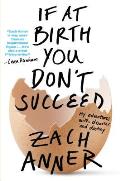
If At Birth You Don't Succeed by Zach Anner


I had never heard of Zach Anner before reading about his book If At Birth You Don't Succeed on librarything. He is an internet star, hosting several different web series, a comedian, fitness instructor...and oh, he has cerebral palsy.


What came through about Zach to me is that he is a person first; his disability is not his defining feature.

One of the many things he does in the book is that he confronts how people often see the disability before they see the person.

I know this is a long quote from the book, but really, it's worth reading...

"A pedestal of prejudice is a hard thing to explain without sounding like a dick. But in a weird way, most of the world places such low expectations on me that there's no way I can do anything but amaze. I recently went on a museum tour of famed illustrator N.C. Wyeth's home and studio. During the tour, I did little more than look at paintings and indifferently notice a slightly narrow dining-room table. Sure, there was the occasional doorway I had to roll through without running into the frame, but it certainly wasn't like docking a shuttle to a space station. This isn't to say that the art itself wasn't beautiful and emotionally compelling to me, but it was an afternoon at a museum, and largely museums only ask their patrons to look at things without touching them. That much I can do. At the end of the experience, the jolly security guard who had escorted us through the tour patted me on the shoulder and said, 'Bet you haven't had this much fun in a loooong time, huh? You did really good!' I didn't have the heart to tell him that I had, in fact, just the day before, been a guest in a house where I was also not allowed to touch anything. And the day before that, I'd kayaked for the first time...over a tree. But still, in this man's mind, my doing nothing successfully was worthy of praise. Perhaps he imagined that I spent my days looking at empty walls wishing I had a still life oil painting of two lemons and a potato, and that I was bored to tears with my normal-size dining room table."

He doesn't sound like a dick. He's intelligent and funny and clever, and he just happens to have cerebral palsy which of course, as he says, is the sexiest of all the palsies.

Zach writes about wanting to be famous, learning how to be funny, figuring out how to live with his disability, but mostly, how to be human.

Definitely worth the read.

Thanks to librarything for their Early Reviewer program! And thank you for reading the blog! You can also check out this blog's Facebook page: NOT The New York Times Book Review. Happy reading!

Saturday, November 28, 2015

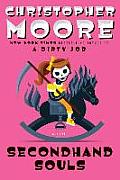
Secondhand Souls by Christopher Moore


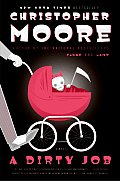
A follow-up to Moore's A Dirty Job, Secondhand Souls continues to follow Charlie Asher, Minty Fresh, Lily, and Sophie as they try to figure out how to deal with the whole death and soul vessel retrieval thing.

        &

When we left Charlie Asher in A Dirty Job, Audrey had put his soul into one of the squirrel people, meat puppets she'd cobbled together from spare parts of other animals.

Secondhand Souls opens a year later, our motley crew discovering that people are dying, but their souls are not being collected. This can't be good. They try to figure out how to stop the impending doom, racing against time.

This is a great continuation of A Dirty Job...so fun!

I was lucky enough to receive a copy of Secondhand Souls through librarything.com's Early Reviewers program. Thank you, librarything!

Thanks for stopping by! Check out the blog's Facebook page: NOT The New York Times Book Review. Happy reading!

Monday, August 17, 2015

Rereading a Few Favorites


I rarely reread books anymore. I used to when I was a kid, eagerly, excitedly, as though I were trying to absorb the words and stories into each fiber of my being.

As an adult? I think I've felt as though there are always new books to discover, and that is where my excitement has been going.

But here I am, rereading a few favorites. I went to Powell's last week with my daughter and I bought two books that I used to own and I want to reread.

I found out that I will be the (lucky!) recipient of a book through librarything's Early Reviewers program, Christopher Moore's next, called Secondhand Souls. Yay! Secondhand Souls is the sequel to A Dirty Job, which I loved. It's been several years since I read it, so I want to read A Dirty Job again before I read Secondhand Souls.

I'm really enjoying reading this again. Poor Charlie Asher, Beta Male, right after his wife dies in childbirth, finds out that he's a death merchant and has to collect soul vessels and pass them on to their new owners. That sounds kind of heavy, but, in usual Christopher Moore style, it's smart and funny. And in addition? The cover glows in the dark.


And the other one? A Walk in the Woods by Bill Bryson.

Recommended by good friends when I was living in a book desert (before the internet I lived in a rural area where there was one small, sad little bookstore that stocked mostly Harlequin romances). When I got my hands on Bryson's book I devoured it, and began a love affair with all things Bryson.


And it's going to be a movie with Robert Redford and Nick Nolte!

As my partner has wisely taught me, books and movies based on said books are different things. Most of the time it isn't even right to compare them. They are different animals. I agree with this. I loved Gone With the Wind the book AND Gone With the Wind the movie, even though the movie left out a lot that was in the book.

Have I been disappointed in a movie based on a book? Sure. Mostly because I was watching the movie with book eyes, the eyes that I wanted it to be the same, or rather, I wanted to have the same experience that I had with the book, which isn't really fair to the movie.

Will A Walk in the Woods movie be as good as the book? It will be different. Is it silly to reread the book before the movie comes out? Shouldn't I just enjoy the movie for what it is and not compare the two? Maybe. And I don't care. I am looking forward to enjoying the book again.

Thanks for stopping by! Be sure to check out this blog's Facebook page: NOT The New York Times Book Review. You can also send us email: 2of3Rs(AT)gmail(DOT)com. Happy reading!

Wednesday, July 15, 2015

Love's Promises by Martha M. Ertman


Librarything does it again! I was lucky enough to receive an Early Reviewer Copy of Love's Promises: How Formal and Informal Contracts Shape All Kinds of Families (Queer Ideas/Queer Action), by Martha M. Ertman. Thank you, Librarything!


I'm going to start by saying that I don't love the title or the cover. The title (not the subtitle, but the main title - Love's Promises) sounds like a romance novel, and in fact when I tried to find the Powell's link for the page for this book, about a dozen romance books came up before Ertman's book. The cover, with a white background and red cups, looks like a Christian self-help book to me. I think this is unfortunate, as the contents were something else entirely.

Love's Promises: How Formal and Informal Contracts Shape All Kinds of Families (Queer Ideas/Queer Action) is written by Martha Ertman. Ertman is a lawyer, biological mother to her young son, in a committed relationship with a woman, and is co-parenting her son with his (gay) biological father and her partner. Not a conventional situation!

And that's the point of this book. Many of us are not in conventional marriage or family relationships, and can experience challenges with the legal system's inability to recognize and honor these less traditional relationships.

Ertman uses her own life to illustrate that more and more people are involved in less conventional (she calls them "Plan B") situations that are not directly addressed by family law.

Many of us not in conventional marriage or family relationships could benefit from her insight into the legal as well as the unofficial aspects of creating and honoring all sorts of relationships with contracts. She talks in depth about formal and informal contracts that help define and protect relationships.

I appreciated Ertman's affirming tone as well as her concrete ideas for protecting and recognizing the significance, importance, and rights in the relationships that are most important to us.

Thanks for stopping by! Check out librarything.com! "Like" this blog's Facebook page: NOT The New York Times Book Review. You can send email to: 2of3Rs(AT)gmail(DOT)com. Happy reading!

Wednesday, October 8, 2014

Egg & Spoon


I was lucky enough to get an Early Reivewer Copy of Gregory Maguire's new book, Egg & Spoon through librarything.com.
Thank you, librarything!

Maguire is great at reimagining familiar stories, fairy tales and folklore. Wicked, his reimagining of The Wizard of Oz, is one of my favorite books.

In this one he goes to Russia, bringing his spin on Russian folklore. Egg & Spoon is a romp that comes with social and political commentary, folklore, and vivid characters.


The story starts with Elena, a Russian peasant girl. We feel her hunger, loneliness and desperation. She meets Ekaterina, a privileged and pampered girl, traveling through Russia by train, during an unplanned stop in Elena's town. And then there's Baba Yaga, a witch who is dangerous, capricious, clever, funny, and maybe even a little bit vulnerable.

As one might expect reading Maguire, there are many adventures. Here they involve mistaken identities, a magical Firebird, the tsar, melting winter, Baba Yaga and her chicken legged house, an ice dragon, and a prince. Matroyshka dolls also figure prominently.

While I haven't loved all of Maguire's other books as much as I loved Wicked, I think Maguire is in top form here.

Thanks for stopping by! You can "like" us on our Facebook page, NOT The New York Times Book Review. You can also send us email: 2of3Rs(AT)gmail(DOT)com. Happy reading!

Thursday, April 17, 2014

Remember Me Like This by Bret Anthony Johnston


I usually think of depression as a cold thing, but in Remember Me Like This, it is oppressive heat.

Set in the fictional town of Southport, Texas, near Corpus Christi on the Gulf Coast, Bret Anthony Johnston conveys a languid tension in a family in a small town that has experienced tragedy. A child has disappeared.


The family is broken. Eric and Laura Campbell's oldest son, Justin, has been missing for four years. Eric, Laura, and their other son, Griff, have spent those four years searching for Justin, not knowing whether he is alive or dead. Four years from when he disappeared and they don't know if they should stop what has felt like a fruitless search, or continue, if only to find their son's body.

As well as conveying the brokenness of the family, Johnston seemed to capture each family member's own grief signature - Laura's energy for her family fading into passion for a rescued dolphin, Eric's inability to confront his own lack of strength, and Griff's life in his brother's fractured shadow, trying to be careful not to mention or emulate his missing brother too much.

How does a family live as hope deteriorates?

I loved the atmosphere of the book. Tension and guilt and fear and depression and hope and heat...Johnston makes each character come believably alive. Having never experienced the awful disappearance of a child, as well as the unknowing of the lost child's fate, many times as I was reading I had the thought that "this is what it must feel like".

The book begins with the family four years into Justin's disappearance. About a third of the way into the book I read the back cover, which told a major plot point. I wish I had not seen that plot development before it happened in my own reading. This is one of those books I think it's better not to know too much about. It's a gift to be part of the unfolding.

These characters and this story will be with me for a long time.


This book will be available for purchase on May 13, 2014. We were lucky enough to snag an ERC (Early Reviewer Copy) through library thing.com. Thank you Librarything!

Clicking on the book cover will take you to Amazon's web page for this book. Clicking on the underlined book cover will take you to Powell's page for this book. Purchasing through these links helps support the blog. Thanks for stopping by!

Friday, March 21, 2014

Book Rating Scale


Several years ago I came across this Book Rating Scale on Bookcrossing.com.

I know that I tend to avoid numerical ratings. I don't care for reducing what I think about a book to a number. Books are so much more than a number rating to me. In addition, I find that I can give a book (or a movie) one rating one day, and a slightly different rating on another day. It's so subjective!

Even though I don't always like numerical ratings, I know that I, too, rely on them when I do see books online at various sites.

I am a member of goodreads.com, librarything.com, and bookcrossing.com, all of which ask for numerical ratings of books chronicled on their sites. Goodreads only offers a 5 point scale. Librarything has a 5 point scale, but it offers the ability to give 1/2 points, which is kind of the same thing as a 10 point scale, isn't it? While this isn't an official bookcrossing.com book rating scale, it's what I've used when I think about rating books on their site. I like that it offers a ten point spread as well as how it describes each level of liking. Or not liking.

So here it is...

Book Rating Scale

(This was the preamble text when I found the scale...)
Note: I took this from katintheboots who took this from booklady331, who took it from Weebaby, who took it from Gizmopuddy, who took it from Sugarkane (now florafloraflora) and Scism. Katintheboots altered it slightly as the ratings are also related to the opinion of the piece as a writer and editor.

10: Excellent, at the top of its category. This book has impacted me deeply, challenged me profoundly, or has simply been a pure delight to read.
9: Great book - just a nitpick stands between it and a 10.
8: Good, solid book that I would recommend to others.
7: Good book, but it didn't grab me in a big way.
6: Decent, but not my type of book.
5: There was nothing remarkable about this book.
4: Maybe somebody else would like this. I didn't enjoy this due to the writing style, editing, or lack thereof.
3: Barely worth reading. The line between taking it and leaving it is very thin.
2: Has major problems. I don't recommend it.
1: It's hard to imagine anyone liking this book.

I know that numerical ratings can be helpful, even if they can also be reductive. There are just too many books movies, songs, artists, MEDIA out there to be able to search concisely without them. Who knows, I might even experiment with using numerical ratings here on this blog!

How do you rate books you read?

Thanks for stopping by the blog! You can "like" us on our facebook page, or send us email: 2of3RS(AT)gmail(DOT)com. Happy reading!

Wednesday, February 5, 2014

Dragnet Nation


Once again I was lucky enough to win an ERC (Early Reviewer Copy) from librarything.com. Julia Angwin's soon-to-be-released book, Dragnet Nation: A Quest for Privacy, Security, and Freedom in a World of Relentless Surveillance, arrived on my doorstep a few weeks ago. Thank you Librarything!


Angwin begins by talking about advances in technology that have increased the ability to track people - phone calls, web browsing history, credit history, etc. She posits that it was a confluence of events that created the surveillance culture we live in now.

The attack on 9/11 brought us fear, and with it the desire to be able to predict - and of course stop - terrorist attacks. At the same time, our ability to use technology to track people's phone calls, messages, email, and and even geographic location was coming into its own. The dot com bubble had burst, and people who worked in technology were needing to find something to do with their knowledge. The answer? Data gathering and tracking.

Angwin explained how people are being tracked. She described "wardriving", which I'd never heard of...

"The private sector race to map the location of every device in the world started with a practice called 'wardriving'. I first went wardriving in Denver in 2002 with some cable company technicians who were showing me how it worked. We drove around in a car, while the technician in the passenger seat kept a laptop open. On his computer was software that would scan the surrounding areas for Wi-Fi networks. When we found an unencrypted Wi-Fi hotspot, we would stop and watch the Internet traffic streaming through his computer screen. We didn't read any of it, but we could have."

And that was in 2002.

We are being tracked. Ostensibly the tracking started to protect us from terrorists. But it has turned into vast sweeps of data gathering including data that has nothing to do with terrorist activity.

You know how those ads pop up on your computer that are related to something you searched for online? You searched for a bathroom sink and then for weeks after, you get ads for bathroom fixtures following you wherever you go? Companies track our shopping searches, and related ads are then targeted to us. Ads seem fairly innocuous. Annoying maybe, but innocuous.

But Angwin looked more deeply into what companies are doing with information they are gathering. They aren't just gathering your searches for bathroom sinks. Companies are compiling income levels, geographic locations, ages of shoppers, web browsing histories, credit histories. They are then using that information to predict who will buy what and for what price. They are using tracking information to change their pricing based on all this information. People are not only being targeted to buy a specific item or related items, they are being given specific pricing based on what the companies predict they will be willing to pay.

About half of cell phone apps transmit phone locations to outside companies, and the vast majority of those do not "provide privacy policies that state what they might do with the information". So not only does that fun phone app use your geographic location to tell you where the nearest burger joint is, but it also transmits your exact location to a huge assortment of companies.

The location tracking companies say that their tracking is anonymous. They also admit that tracking someone's location is some of the most sensitive data you can collect on a person. If you have the unique identifying number of a phone, and the location of the person using the phone, companies can not only find out where you've been, but predict where you will be in the future. And they are. I do not care for this.

Neither did Angwin. She decided to find out if she could erase, or at least dramatically reduce, her digital footprint. She also wanted to explore how to minimize the ability of companies as well as our government to be able to track her through her cell phone.

These proved to be difficult tasks.

As she attempted to try not to be tracked, she turned off wifi as well as all location apps and settings on her phones, both her iphone and her burner phone. She identified 58 tracking companies and opted out of the eleven that offered opt out options. She realized that she wasn't able to opt out of nearly enough to make her location untrackable, so she got a Faraday bag, which, when she put her cell phone in it, made it untrackable. It also made it unable to receive calls or emails or texts, so she could only obtain those when she took it out of the bag and turned it on, which was almost the same as not having it with her at all.

She felt that her attempts at securing cell phone privacy resulted in mostly failure.

Angwin tried to figure out how to use the technology we have and rely on - email, online shopping, research - anonymously and securely. She consulted with software experts and privacy experts, and tried many different strategies and programs, from not using Google and using other browsers such as DuckDuckGo, to developing passwords that are much stronger. She encrypted her email. She used fake identities.

She took extreme measures to try and stay anonymous. I was impressed and daunted, both by the extent of the data gathering and tracking that happens as well as her efforts to reduce companies' abilities to track her. It was discouraging and scary that she took such extensive lengths to become untrackable, lengths that quite often proved ineffective and/or unwieldy.

Europe has laws that require data tracking companies to provide their tracking information to those they've tracked, i.e. regular citizens. We do not have those laws here. In the U.S., information on individuals gathered by data tracking is difficult or impossible to obtain, and tracking itself is difficult or impossible to avoid, unless one does not use computers or cell phones at all.

Angwin went on to describe further developments in technology. Some stores are exploring using eye scanning technology, scanning all customers' eyes as they enter a store to identify them. This can be helpful to a store in terms of loss prevention. If someone has shoplifted from that store, and the scanner detects that that person is in the store again, measures can be taken to ensure that that person doesn't steal again. But identifying people so specifically is a slippery slope. Stores are supposed to (at least the stores I've worked in) provide excellent customer service to all of the customers. What if scanning technology identifies the big spenders as well as the thieves? And it identifies the customers who only come in for one or two items and always use coupons? Mightn't stores be tempted to direct their limited customer service resources to the customers who are most likely to spend more in the store? In addition, that information, that a person shops at a certain store on a certain day/time, can and will be shared with other companies and entities who want to determine a person's location. We already are under surveillance. This takes it even further and concerns me.

I don't want to go to the lengths that Angwin did to try to be less trackable. At the same time, I am dismayed by how much tracking is going on, and share her concerns about where this might lead.

In addition to specific strategies she employed (and programs she used, etc.) to try to reduce her digital footprint, Dragnet Nation: A Quest for Privacy, Security, and Freedom in a World of Relentless Surveillance is filled with information about the kinds of tracking that is happening now, how it evolved, the effect that being under surveillance has on people (not good), as well as the dangers of where it might be headed. The concerns she raises are important.

This is one of those books that I want everyone to read or at least know about. It seems vital to raise awareness about the level of surveillance and tracking that is going on now. To get people at least thinking about how they are being tracked. Is this the kind of society we want to live in? And if not, how can we make it better?

Clicking on the underlined book title will take you to Powell's web page for each book. Clicking on the book cover will take you to Amazon's page for each book. Clicking through either link will result in further tracking. Purchasing through these links also helps support the blog.
Wednesday, January 15, 2014

Why Are You So Sad? by Jason Porter


I always consider myself lucky to be chosen as a recipient for an ERC (Early Reviewer Copy) of a book from librarything, even if I do not entirely love the book.

Case in point...

Librarything does a great job on their website of displaying and describing each book, making it fun to browse their ERC offerings. Of course I try to choose that I think I will like, which is why I selected WHY ARE YOU SO SAD? by Jason Porter. Described as hilarious and poignant, it looked like a book I would enjoy. I like hilarious. I like poignant.


Why Are You So Sad? is a novel about a guy, Ray, who ruminates about being sad. Why is he sad? Is it out and out depression? Isn't everybody pretty much depressed? How could he find out if other people feel the way he does (as he suspects) or if it's just him? Ray devises an emotional wellness survey, purporting it to be from the higher ups in his company, to see how depressed other people around him might be. He uses questions like, "If you were a day of the week, would you be a Monday or a Wednesday?"

I liked how Ray sneaked the survey to co-workers, and reading some of their responses was fun. Ray squirms a bit when he has to explain where the survey originated. Also amusing.

He leaves the survey for his wife as well, hoping she'll complete it, even though he knows that she is rather impatient with him and all his ruminations.

I found myself being a bit impatient with Ray too. While there were a few injections of creativity in the story - I liked some of the co-workers' responses to the survey - it seemed a bit self-indulgent to have a character who did so much ruminating and not much living. I wanted him to figure out what he wanted to do in his life and just do it.

Thank you to librarything for allowing me to receive an ERC! You can check out librarything here: www.librarything.com. Clicking on the book cover will take you to Amazon's web page for this book. Clicking on the underlined book title will take you to Powell's web page for each book. Purchasing through these links helps support the blog!


Monday, November 22, 2010

Moonlight in Odessa


I was fortunate enough to receive Moonlight in Odessa, as an Early Reviewer copy through librarything.com. (thank you, librarything!)

                                    Moonlight in Odessa: A Novel

Daria, a 23 year old woman, is the main character and narrator. Ukrainian, she lives in Odessa with her grandmother. Educated as an engineer, she is an office assistant with a shipping firm, scrambling to eke out an existence with severe economic challenges in the Ukraine. To make more money, she takes a second job with Soviet Unions (get it?), a matchmaking firm pairing American men with Ukrainian women.

Daria has learned to navigate the sometimes seedy underworld that comprises daily life in Odessa, including bribing officials and dealing with mobsters. She is invaluable to her boss at the shipping firm, but wants more for her life. As she works with the matchmaking firm, she explores possibilities for love for herself, including coming to the U.S. to be with an American man who turns out to be less than he claimed to be in his communications with her.

One thing that bugged me about the story was Daria and cooking. In the beginning of the book, Daria has never cooked. Her Boba (grandmother) cooked for her growing up. Cooking in Odessa is revered and is a sign of love for friends and family members. Later in the book, Daria learns a certain kind of cooking (not Odessan cooking which is elaborate), instead she learns bland, low fat, chicken in broth and steamed vegetables kind of cooking. Then a few months later in the story she makes an amazing Odessan feast for her friends and neighbors, and every dish is phenomenal, which seemed a little unrealistic to me. Then, a month or so later, she meets someone who will show her how to bake. Does she know how to cook or not?

One thing the author did that I really liked and thought was effective was how different English verbs and their tenses came into Daria's mind when she was experiencing feelings...

"He was just like other men, only with shinier teeth and fancy cologne. We stared at each other. The only sound in the office was the ticking of a clock. Weep-wept-wept. Win-won-won. Withdraw-withdrew-withdrawn."
Well done.

A lot of the book has Daria (and many others in Odessa), longing for ease in life in America. Consequently, there are many comparisons and descriptions of the differences between Ukrainian life (and Ukrainians) and American life (and Americans)...

"I ran to the self-help section. (In Ukraine, we weren't big on self-help. People depended on fate or the State to help them.) Americans were very much into self-serve, self-medication, and self-help: the ultimate do-it-yourselfers. Americans were all part-time pharmacists. They knew exactly which medication to take for any ailment. They found answers in books. Look at Tristan. Men are from Mars, Women are from Venus had clearly helped him. I found titles like Closing the Deal; The Rules; Men are like Waffles, Women are like Spaghetti, and then I found a book entitled Ten Stupid Things Women Do to Mess Up Their Lives. I looked at the table of contents and found that I had committed a completely different ten. So many books were aimed at getting a man. What I needed was a book entitled Catch and Release; Put Him Back in the Sea Painlessly and Effortlessly. No such luck."

The book concluded with a tidy ending (which I don't always like). However, I did like that Moonlight in Odessa introduced me to a world that was unfamiliar to me, and used it to contrast it with life in the U.S. The author clearly loves Odessa, and even though there may have been a few too many mentionings of the wonderfulness of Odessa, it was delightful to read about Daria and a place that is clearly dear to the author's heart.

Thanks for checking out the blog! You can send email to: 2of3RsATgmailDOTcom

Sunday, February 28, 2010

The Swimming Pool by Holly LeCraw


This is a book I dove right into without needing to come up for air. Ms. LeCraw has packed the pages with enough sustenance to read the book in one sitting. (Ok, maybe just ONE of those Mint Juleps that Cecil is pedaling at the pool party would be welcome during the read)

I was lucky enough to get an advanced reader's copy of "The Swimming Pool" (TSP) through the Early Reviewers Group at LibraryThing.com. Apparently, when I request a book the LibraryThing search engine goes to work matching my previous tastes, based on my posted Library, to the books I request. According to said engine, TSP was a good fit for me. The engine proved itself to be quite reliable in this pick.

My partner, Book Lover, will also be quite happy to hear that my advanced reader's copy had NO reader's guide. We, consenting adults, in a free country are left to ponder the themes, characters, and plots all on our very own. I am wondering if all this free thinking could get us in trouble. Will we be tempted to talk about things that the author never intended? Will the book be subject to our own life stories and experiences instead? Will it end society as we know it? (A bit over the top, but still a concern)

TSP was full of lush characters that flew off the pages in three dimensions. Seeing yourself in Ms. LeCraw's characters is not always flattering but it is certainly revealing.

When I first saw the cover and the blurbs (I try not to read the blurbs but it's hard on an advanced reader's copy not to) I thought I was destined for some fluffy chick lit (no offense to chickliters) but this was not to be the case. The novel delves into the deepest of family secrets and how each of the characters is ultimately affected; whether a secret teller or a secret keeper.